since 2023
Radiosondes
I pick up the signal from weather balloons, follow where they come down and sometimes go and fetch them.
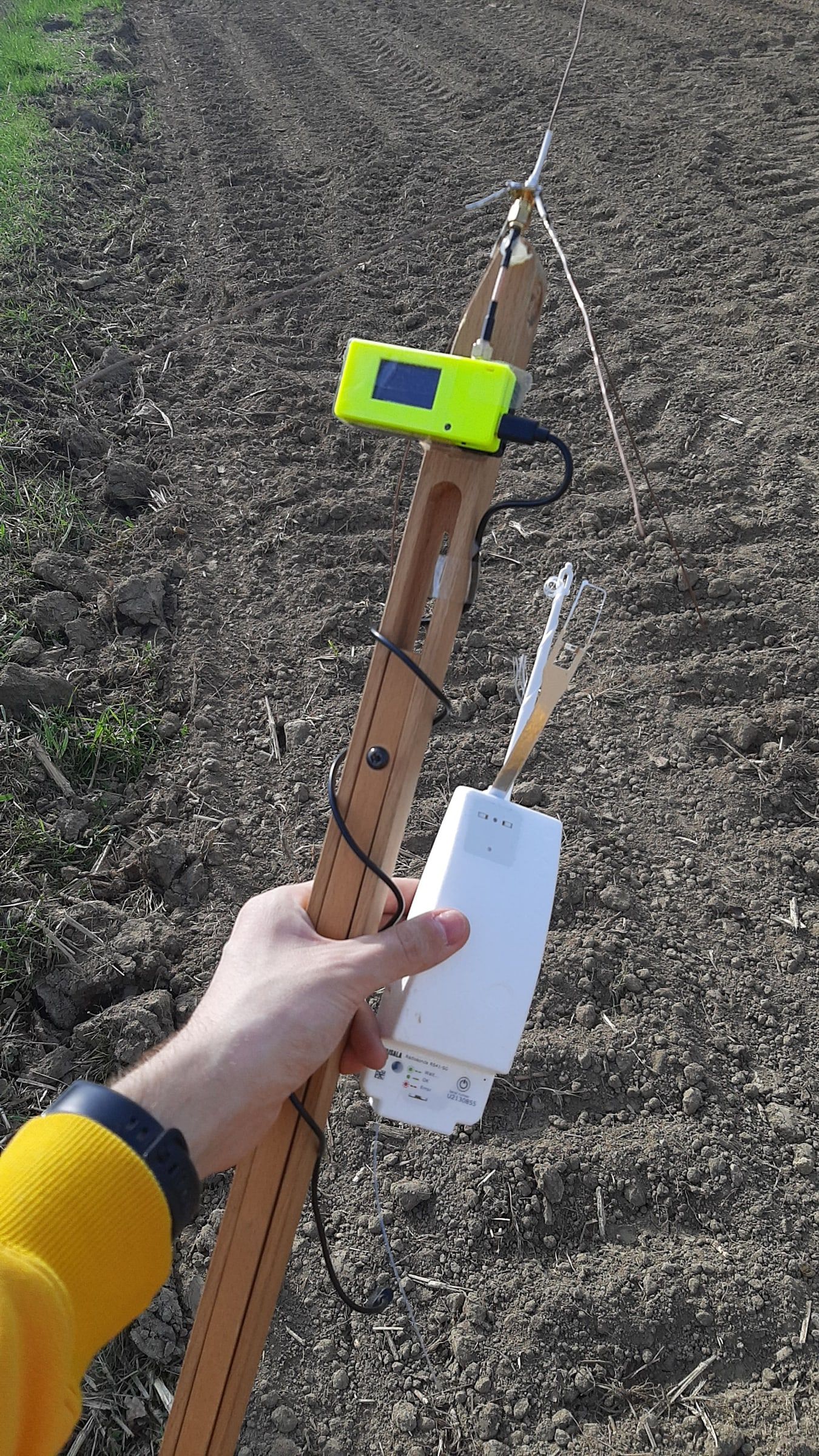
Twice a day, at midnight and at noon Greenwich time, a balloon goes up from a number of weather stations in Italy and across Europe. Hanging below it on a line a few tens of metres long is a radiosondeA small box with GPS and sensors hung under a weather balloon: it measures the air as it climbs to thirty kilometres and sends it all to the ground.: a small white box with a GPS and sensors that measure temperature, humidity and pressure as it climbs, and send everything down to the ground by radio. That data ends up in the weather forecast.
The balloon starts out about three metres wide and, as it rises towards thirty kilometres, where the air is incredibly thin, it swells to three times that size. Then it bursts, a parachute opens and the sonde comes back down, still transmitting its position. Somewhere, in a field, in a tree or on a roof, it lands. And someone can go and get it.
Listening to them
To pick up sondes on the move I use a portable receiver made from a TTGO board with a 433 MHz radio module and the MySondy firmwareThe program that runs inside an electronic device and tells it what to do.: it decodes the sonde’s signal and shows its position on a map on my phone, which is exactly what you need when you’re searching for it in the middle of the fields.
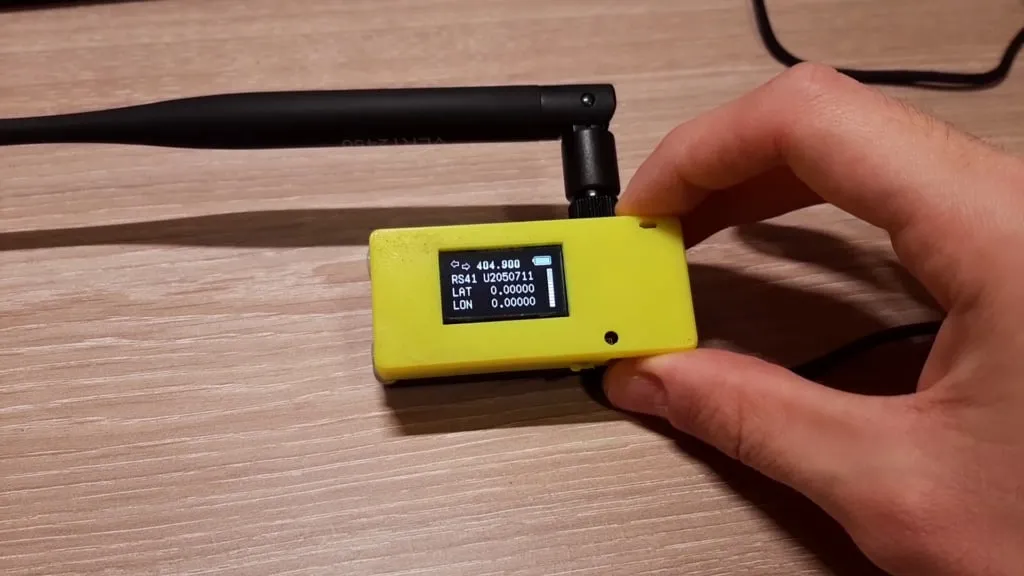 The portable receiver.
At home in Crema I had two fixed, more sensitive stations: a Raspberry PiA computer the size of a credit card, cheap and easy to program. with a radio receiver and a ground plane antenna I built myself. They picked up the sondes passing by and uploaded the data to SondeHub and Radiosondy, the two sites where anyone can follow the flights live. Today only the Raspberry Pi is left on the balcony, and I use it for an SDR receiver: home reception of sondes is switched off.
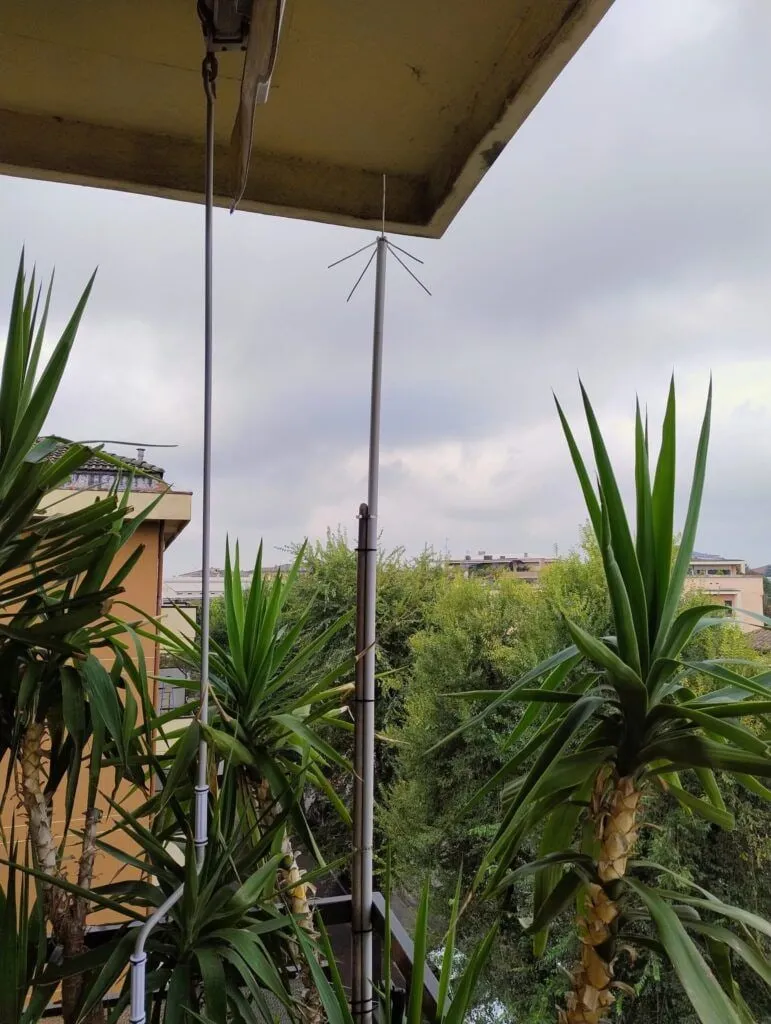 The fixed station’s antenna.
Going to get them
My first recovery was on 21 March 2023, in Codogno: the sonde was in a field, with its parachute caught in a tree. Since then I’ve gone out seventeen times and recovered eleven. Nearly all of them had been launched from Cameri, near Novara; a couple came from Switzerland.
The best part is that you can follow a sonde for its whole flight. The one from my first recovery took off from Cameri at noon Italian time: it climbed to 31,550 metres above Opera, just south of Milan, then came down on its parachute and reached Codogno a little over three hours later, ninety kilometres from the launch site. Several amateur radio stations received its position throughout the flight, so you can still replay it today.
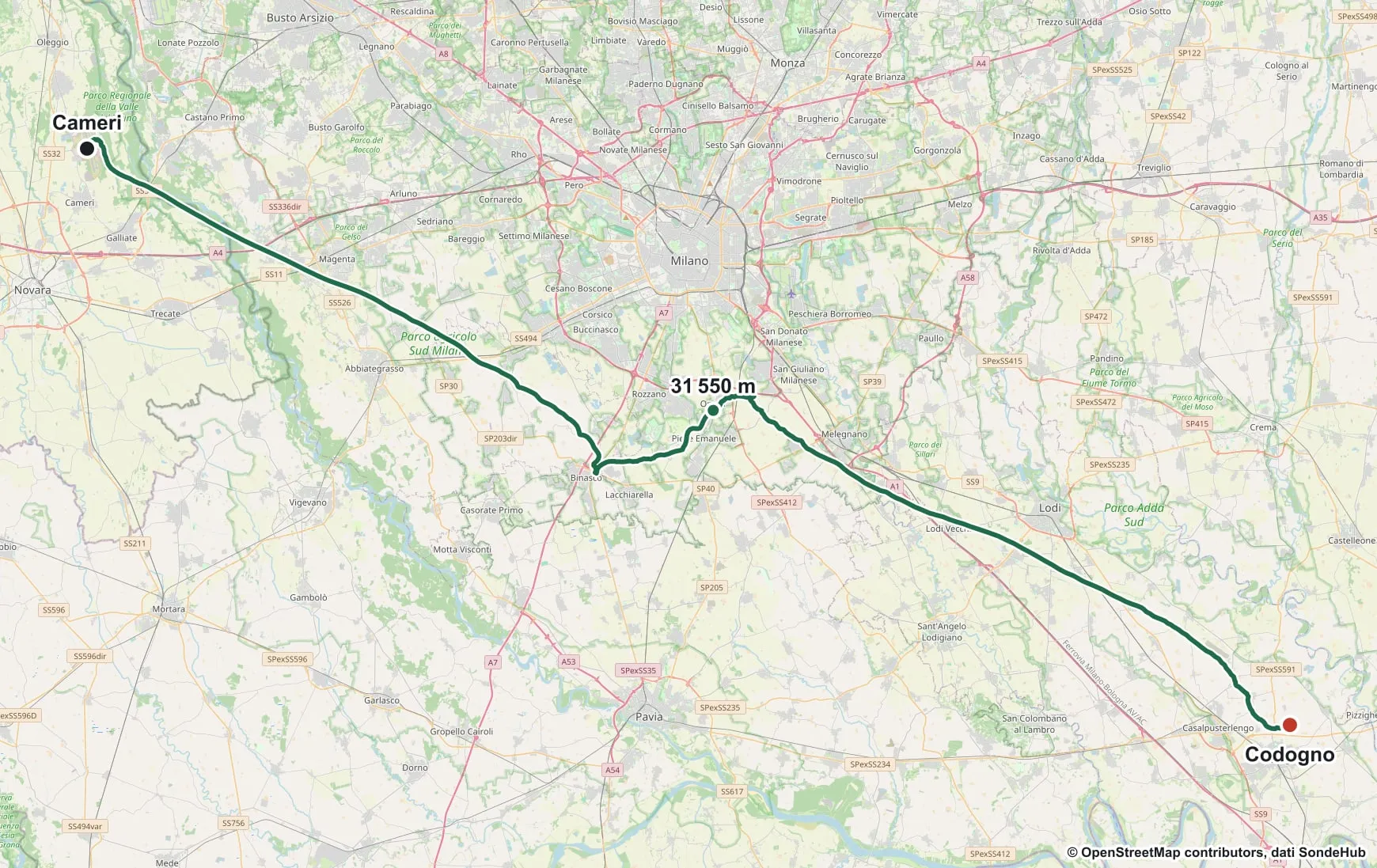 The flight of my first sonde, 21 March 2023. Data from SondeHub, map © OpenStreetMap.
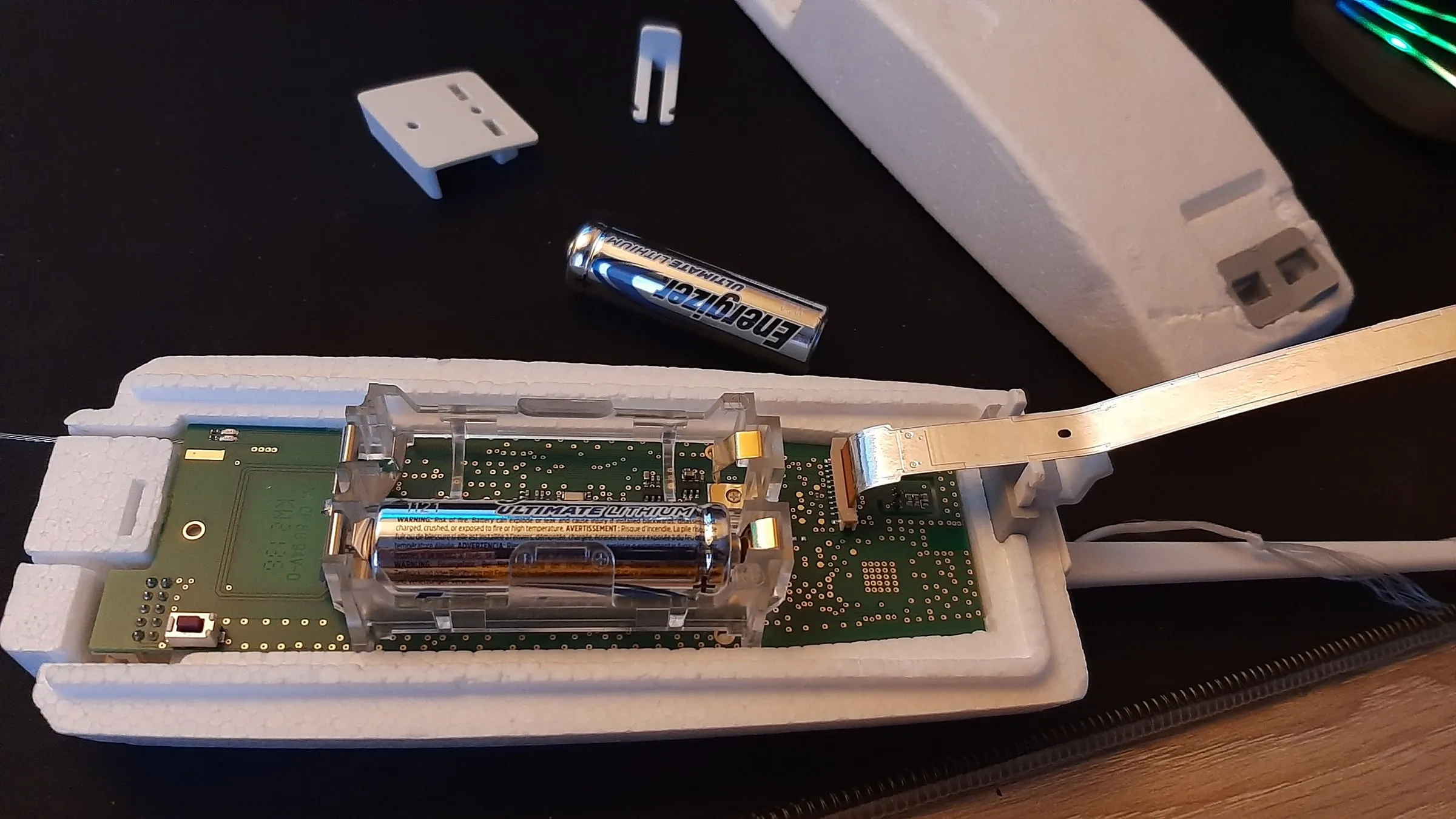 The first sonde, opened the same evening.
Each one has its own story. One carried an ozone sensor, and two of us found it in a residential area. One got tangled on a high-voltage line, thirty metres up: I couldn’t reach it, and later another hunter went back for it. Once a farmer had already picked one up from his field just before I arrived, and he handed it over to me. The last one, in December 2025, got stuck at the top of a very tall tree in thick undergrowth: nothing to be done.
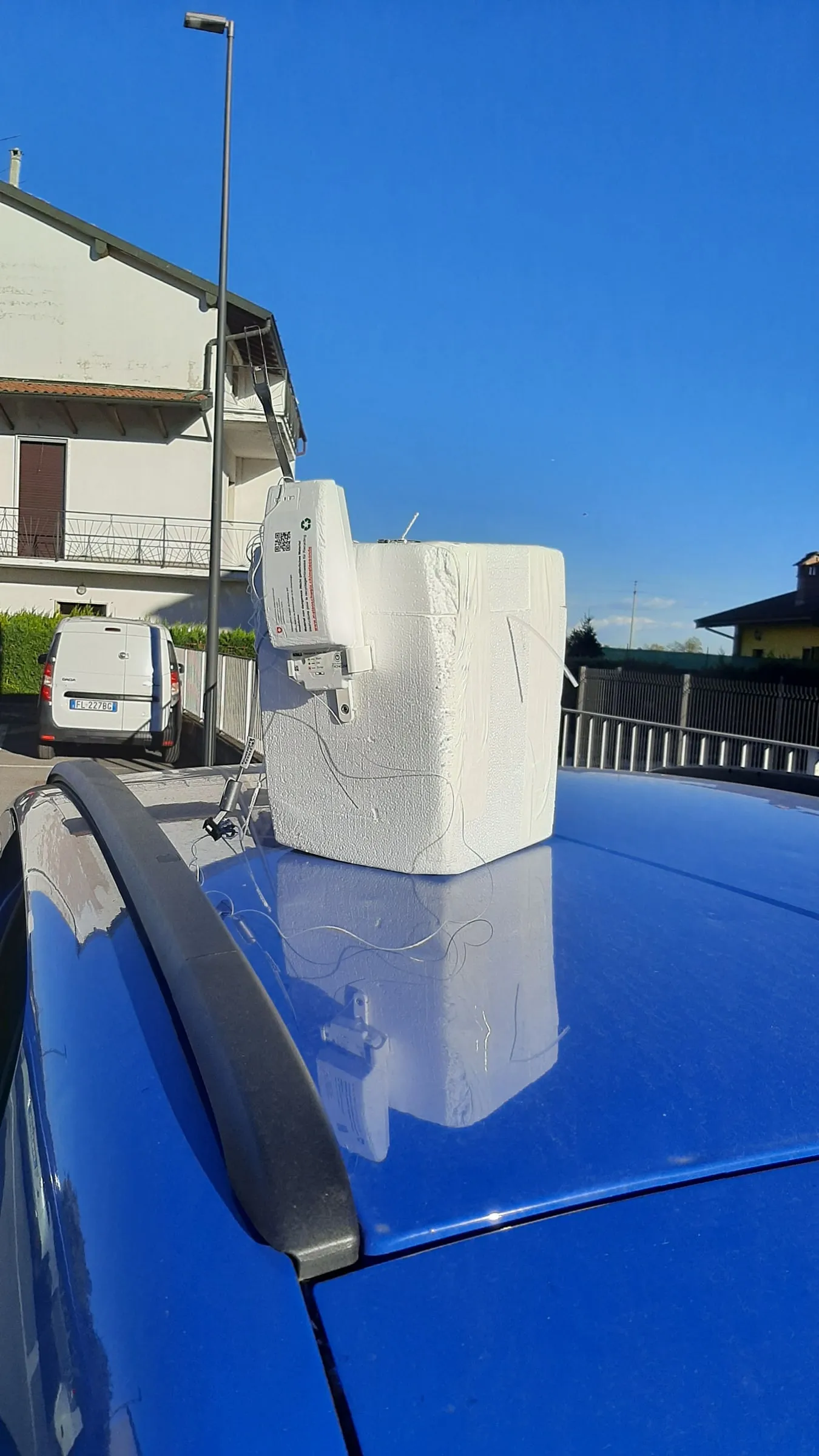 The sonde with the ozone sensor, November 2023.
I found one by chance on 3 October 2026, in the Val di Taro, at the foot of a beech tree: a Vaisala RS41, with its serial number on the label.
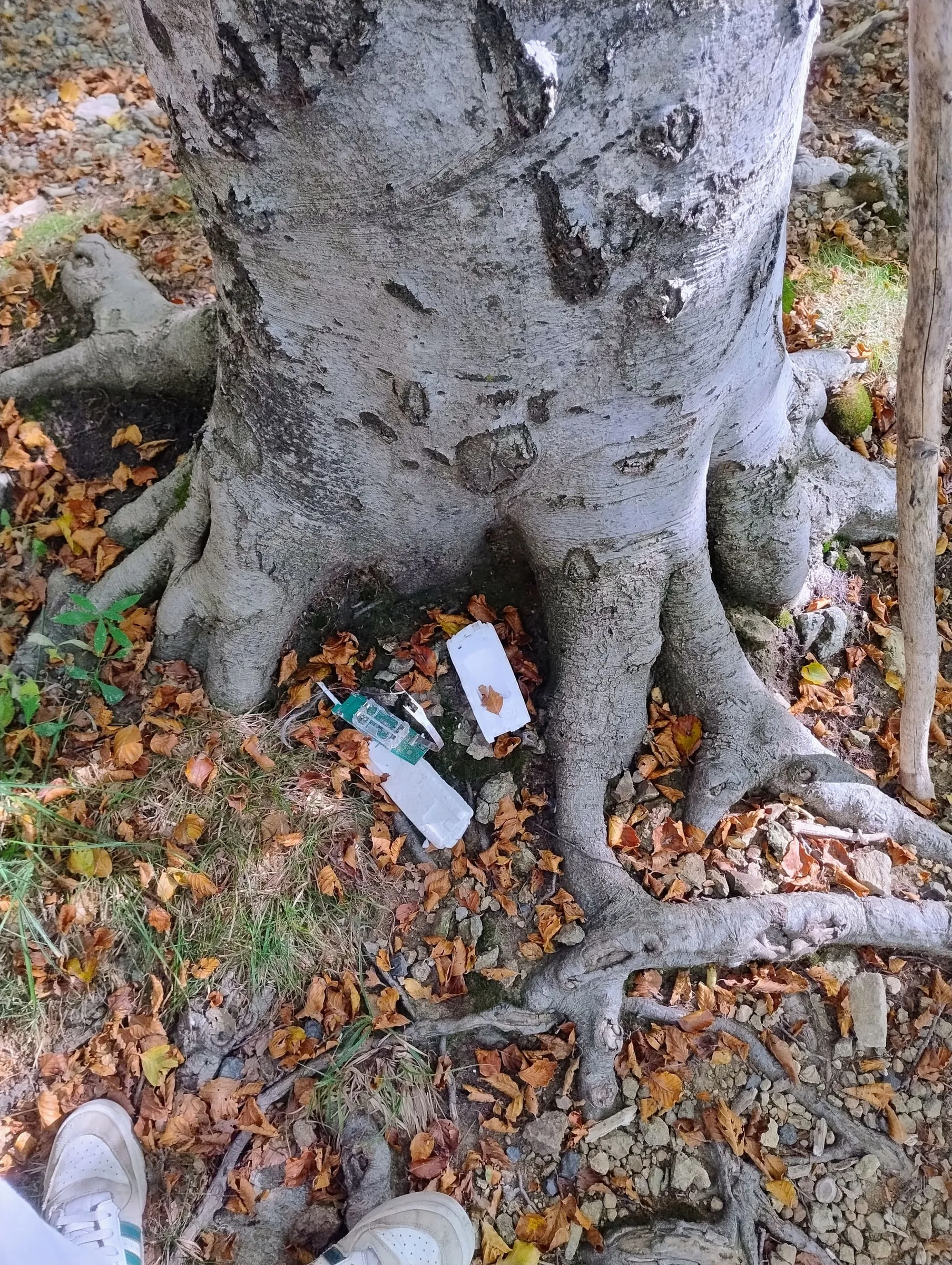 How it looked when I first saw it, at 11:21.
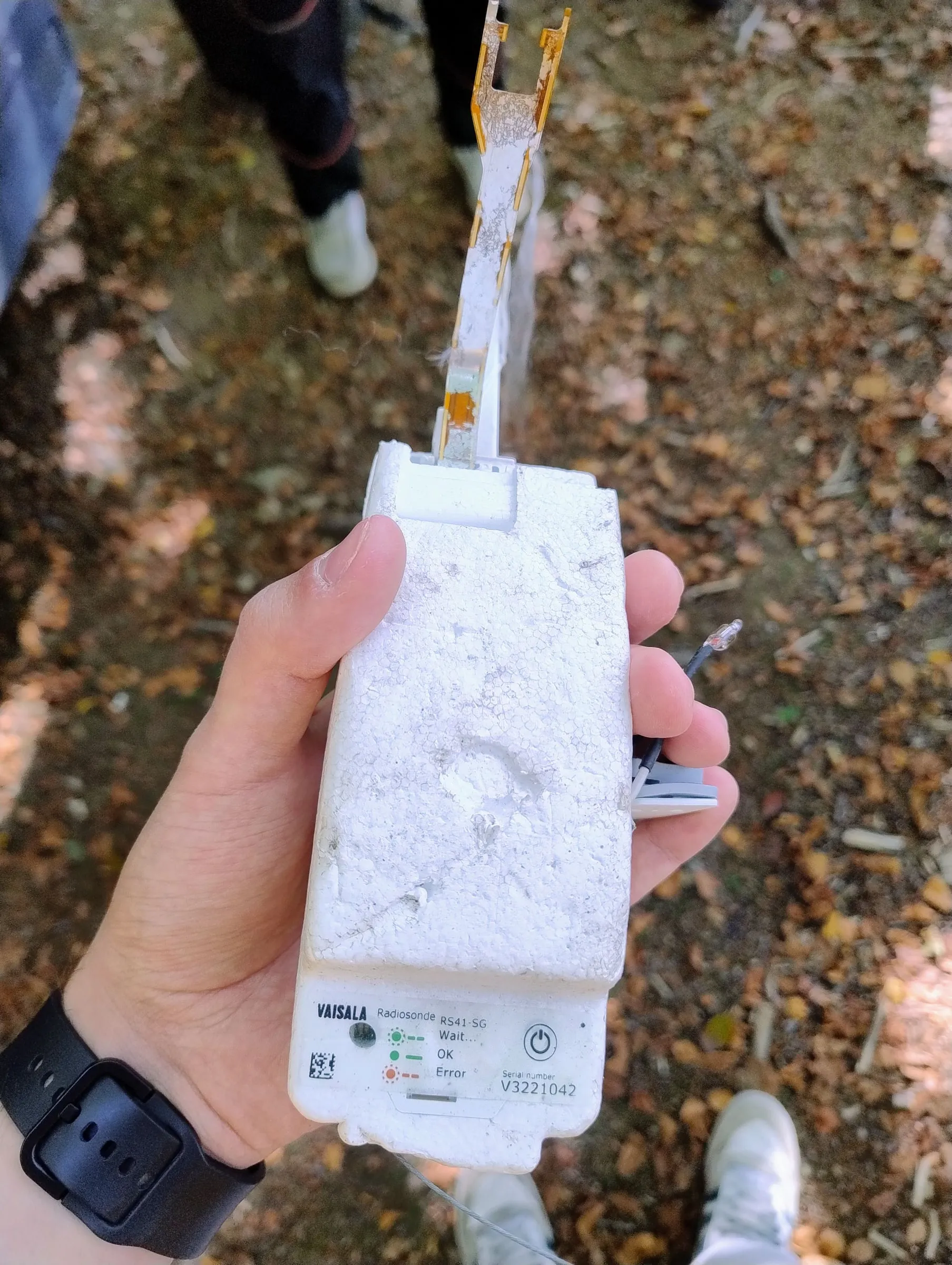 Two minutes later, in my hand: the serial number is on the label.
I’ve made many recoveries with other enthusiasts, such as Luca IW2NCW, Maurizio IZ2LPI and Tommaso, sometimes two of us, sometimes a group, sometimes with someone helping from home, following the flight from afar. Everything there is to know, the list of recoveries and the statistics, is on sonde.natmus.net (in Italian).
What I learned
How to predict where something flying thirty kilometres up is going to land, and to trust the calculations only so far. How to build an antenna that really works. And that the people you meet in the middle of the fields, when you explain what you’re looking for, are almost always kind.
If you ever find one, report it on SondeHub or Radiosondy: someone is looking for it.