since 2024
EnjoyBuds
A radio network for finding people where phones have no signal. I co-founded it, and I built the device software, the repeaters, the servers and the app.
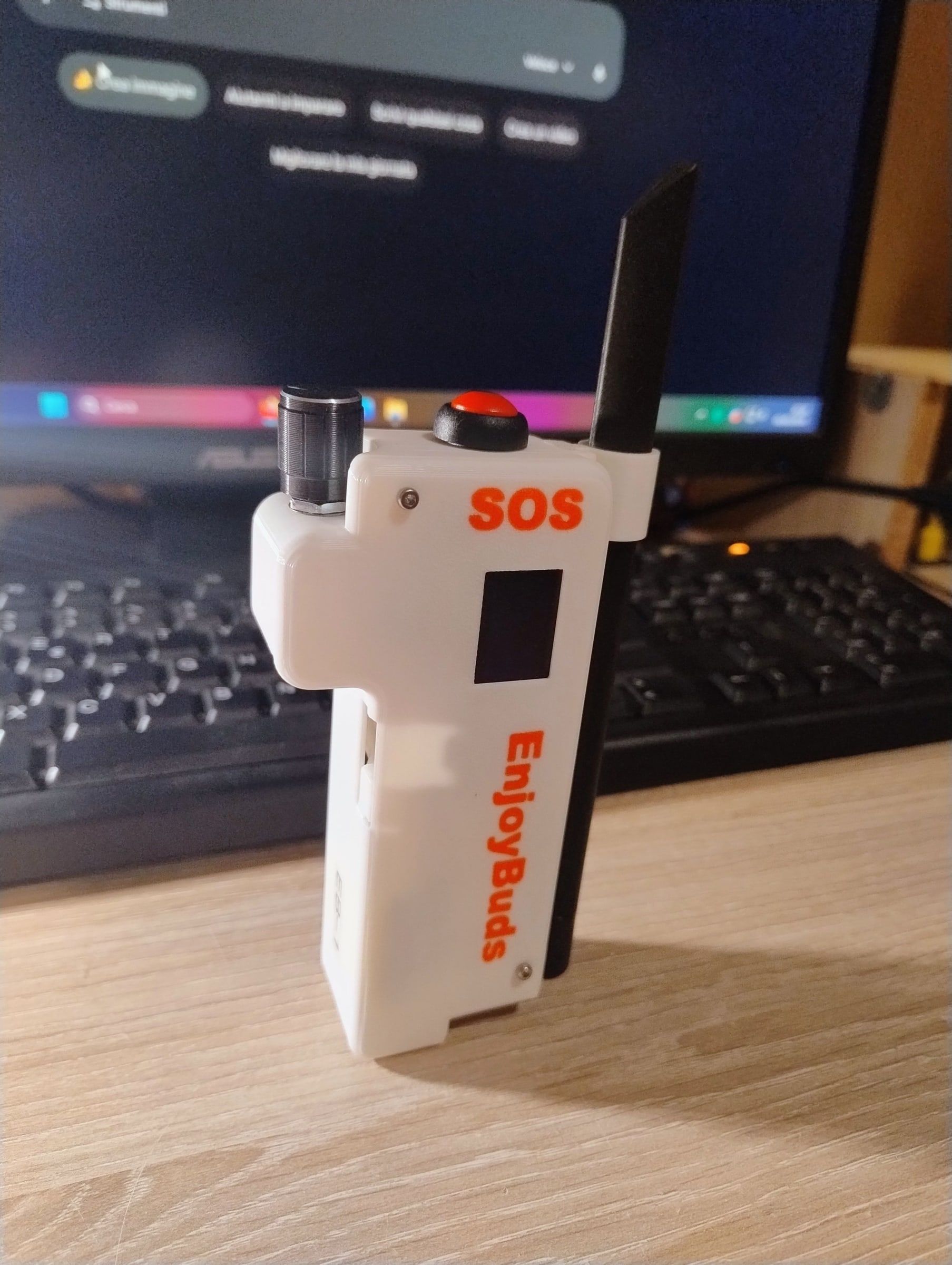
There are places where your phone has no signal: in the mountains, in a forest, at the bottom of a valley, sometimes just a few kilometres from home. If someone gets hurt there, or you simply don’t know where they are, there’s no way to find out. EnjoyBuds was born for exactly this: always knowing where your people are, even where phones have no signal.
It’s a private radio network. Each person carries a small device that sends their position by radio; repeatersA radio placed up high that receives signals and sends them out again, so they travel further., the gatewaysThe bridge between the radio network and the internet: it receives messages by radio and sends them to a server, and back., pick it up and pass it on to the internet; a web page shows everything on a map. If someone presses the SOS button, the others know straight away, even if nobody has a signal at that moment.
We founded EnjoyBuds as a team of two, my business partner and me, and I look after the technical side: the software running on the devices, the gateways, the servers and the web application.
The beginnings, soldered by hand
The project was born in 2024, but for a long time there was nothing concrete: a few LoRaA way of sending small amounts of data by radio, but very far and using very little battery. boards and that was it. At the start of 2026 EnjoyBuds was four 3D-printed boxes, white and black, with a red button and the word SOS. Inside each one was a board with a LoRa radio and GPS already built in, and I had soldered the wires myself, one by one. They were there to find out whether the idea held up: whether a message left, whether it arrived, how long the battery lasted.
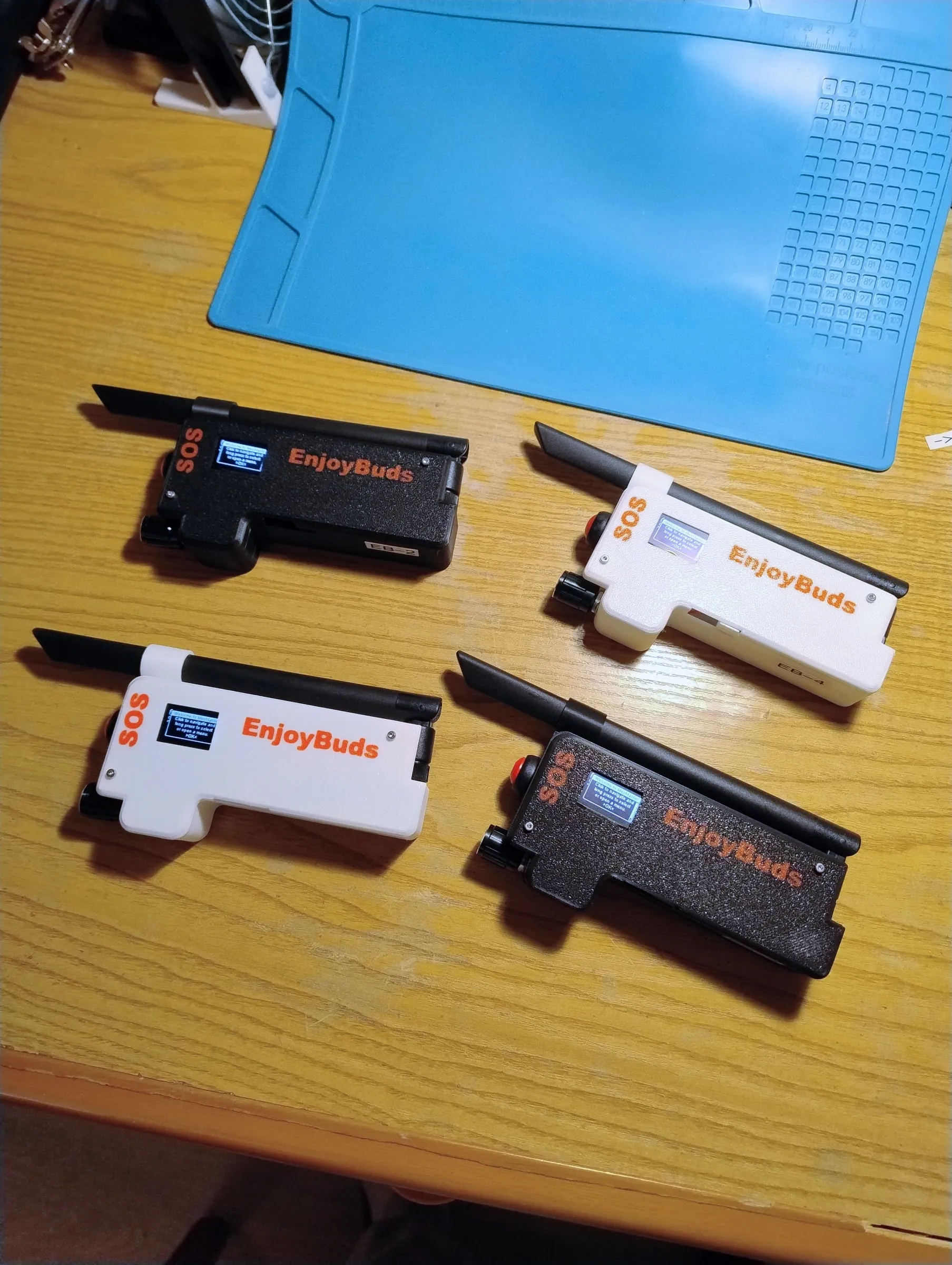 The first prototypes, January 2026. They’re retired now.
Underneath ran MeshtasticA free, open project that turns small LoRa radios into a mesh network for sending messages and positions without the internet., a free project that lets small LoRa radio devices talk to each other, passing messages from one to the next. But a system for finding people needs things Meshtastic doesn’t do on its own, so I started changing it.
What’s inside
Today there are two devices, chosen for two different ways of working. The first has a screen and GPS, and you can read it at a glance; the second is a flat card with no screen that fits in a pocket or hangs round your neck. Both have a physical SOS button.
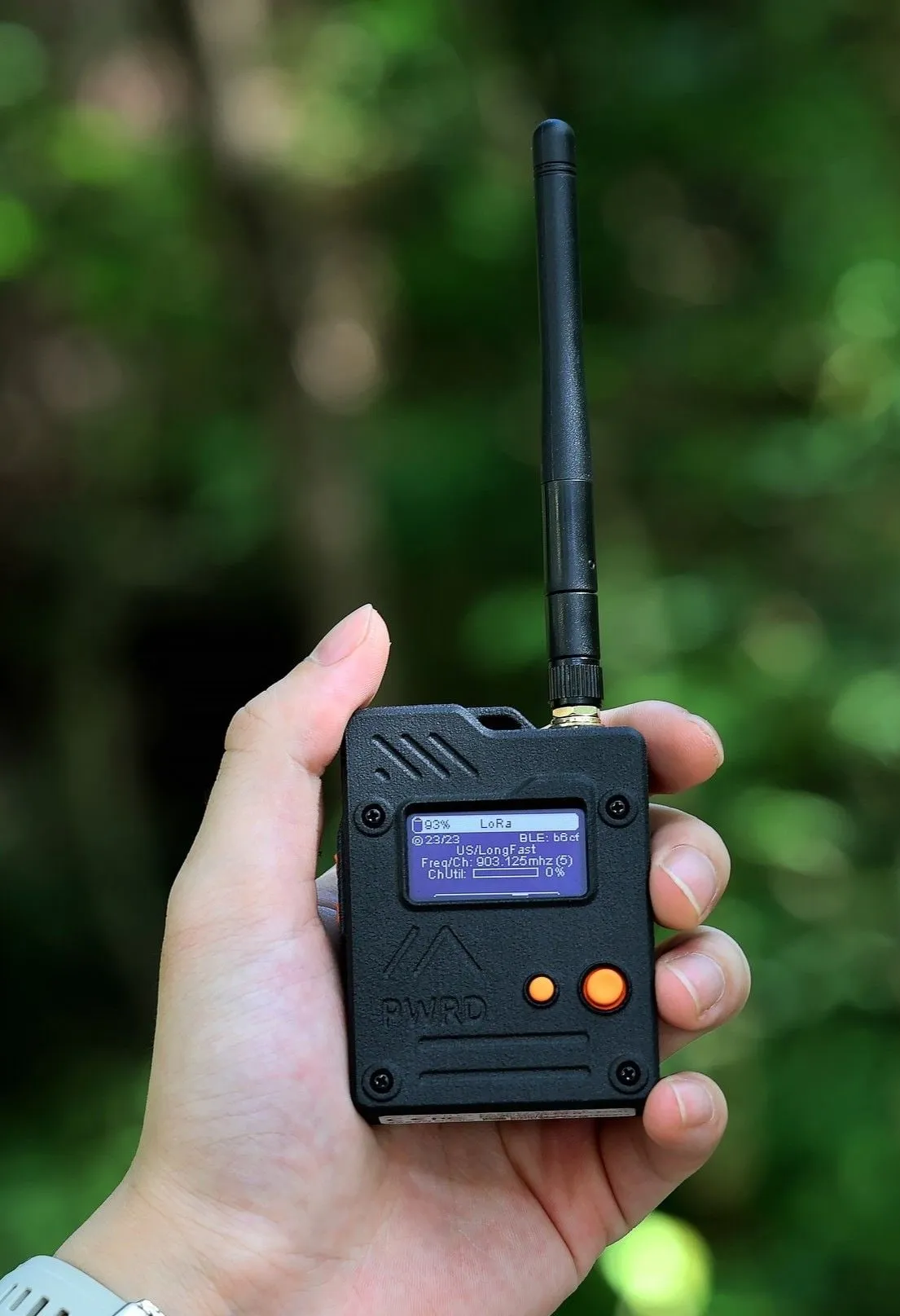 The device with the screen.
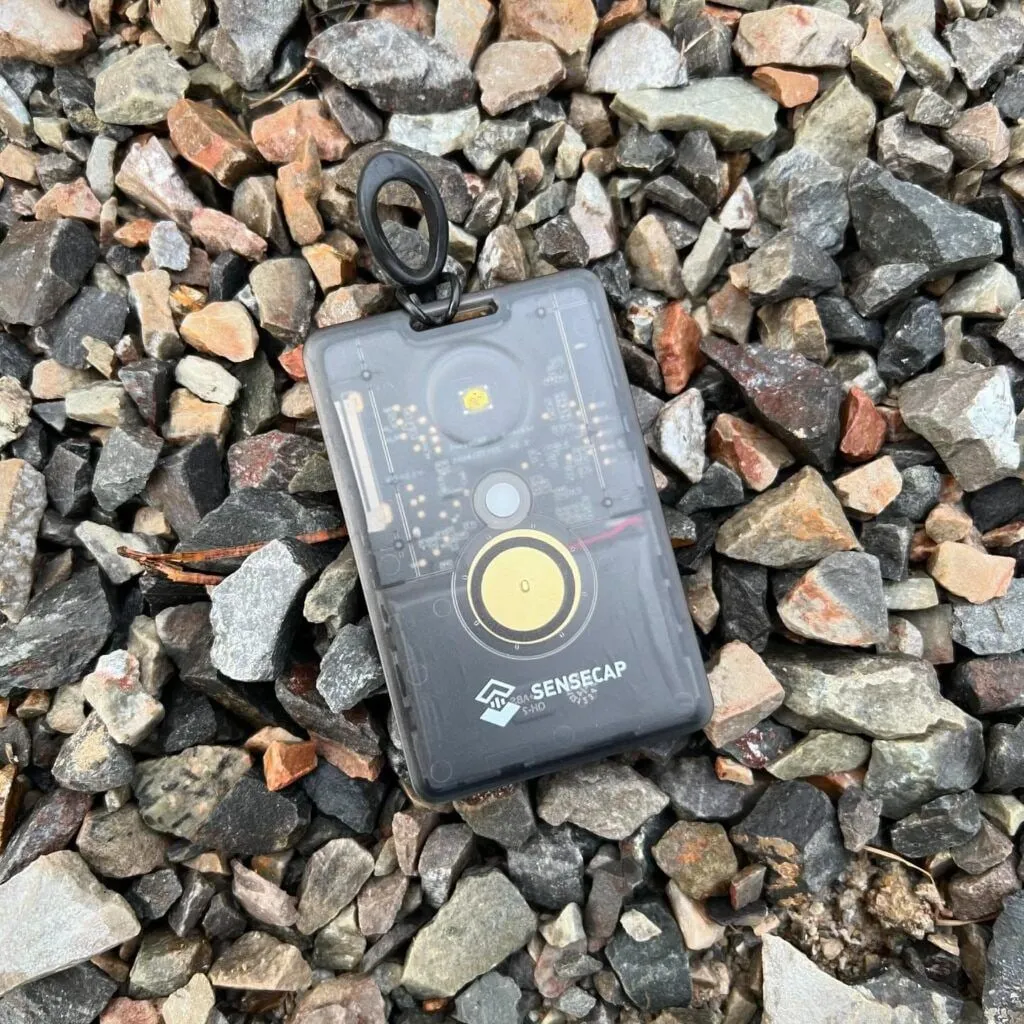 The pocket card.
On the devices I wrote our own firmwareThe program that runs inside an electronic device and tells it what to do., starting from Meshtastic. The SOS has a countdown and a confirmation, so it doesn’t go off by mistake, and it sounds the alarm for the whole group even when there’s no gateway nearby. Positions are sent more often when you’re moving and less often when you’re still, to save battery and airtime. And the group can message each other, even without the internet.
Then there are the gateways, the bridge between the radio network and the internet: closed metal boxes with an antenna, mounted wherever they’re needed. Sometimes on a pole, sometimes on a tree or a rock in the mountains.
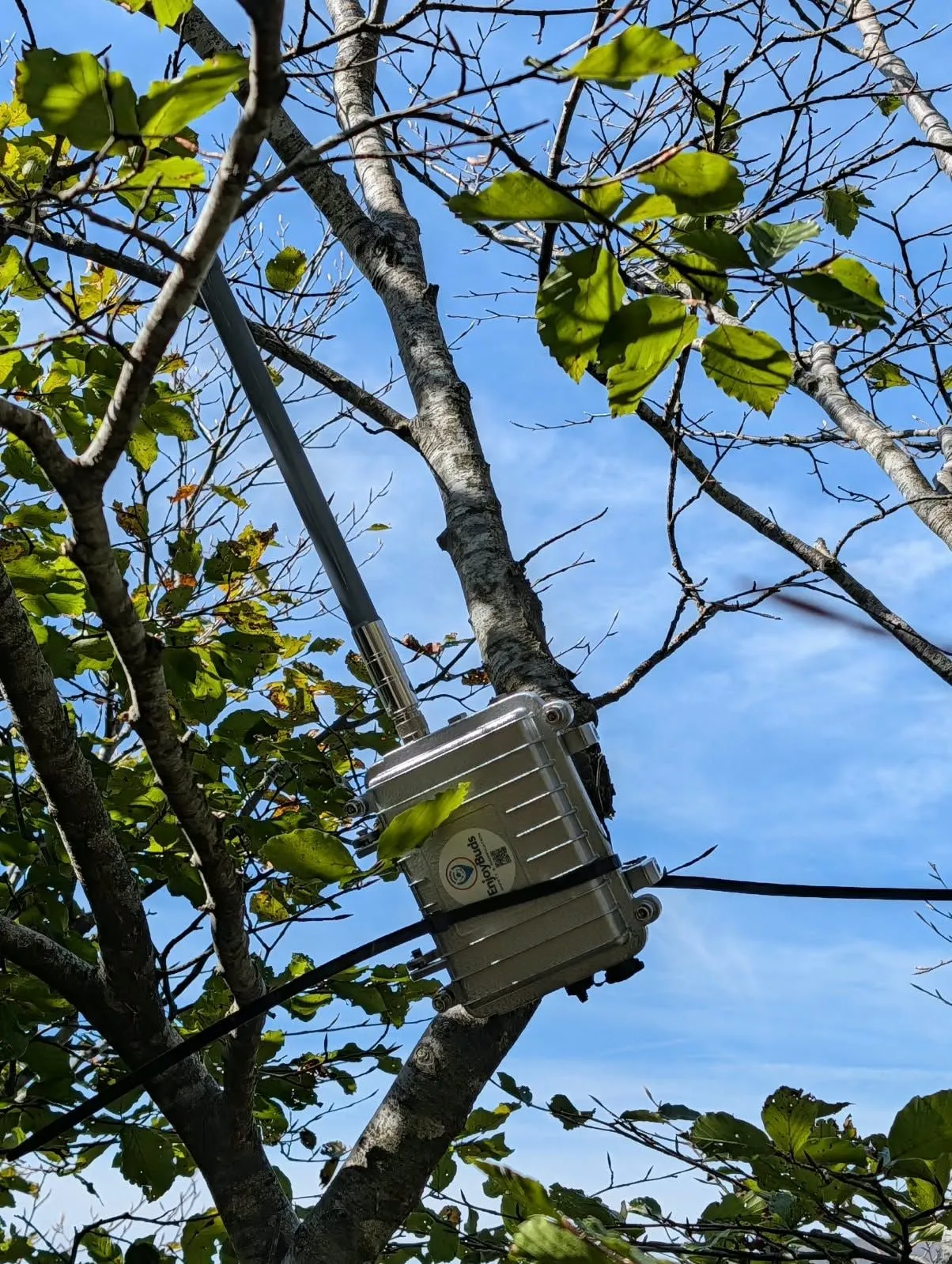 A gateway mounted on a tree.
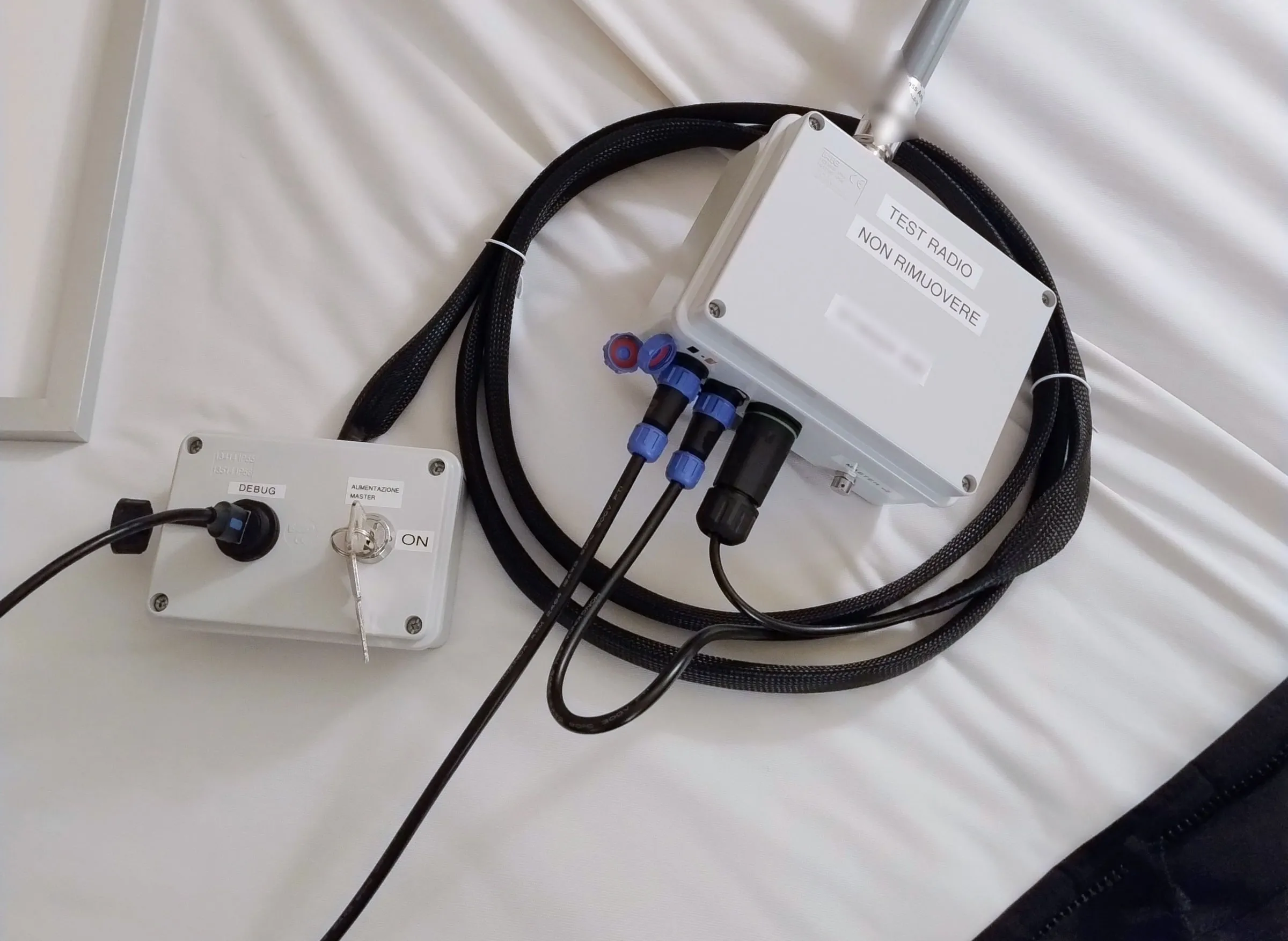 The second gateway I built, on test in November 2025. On the left, the auxiliary unit, with the debug socket and the key switch for the power. Today it is up in the mountains.
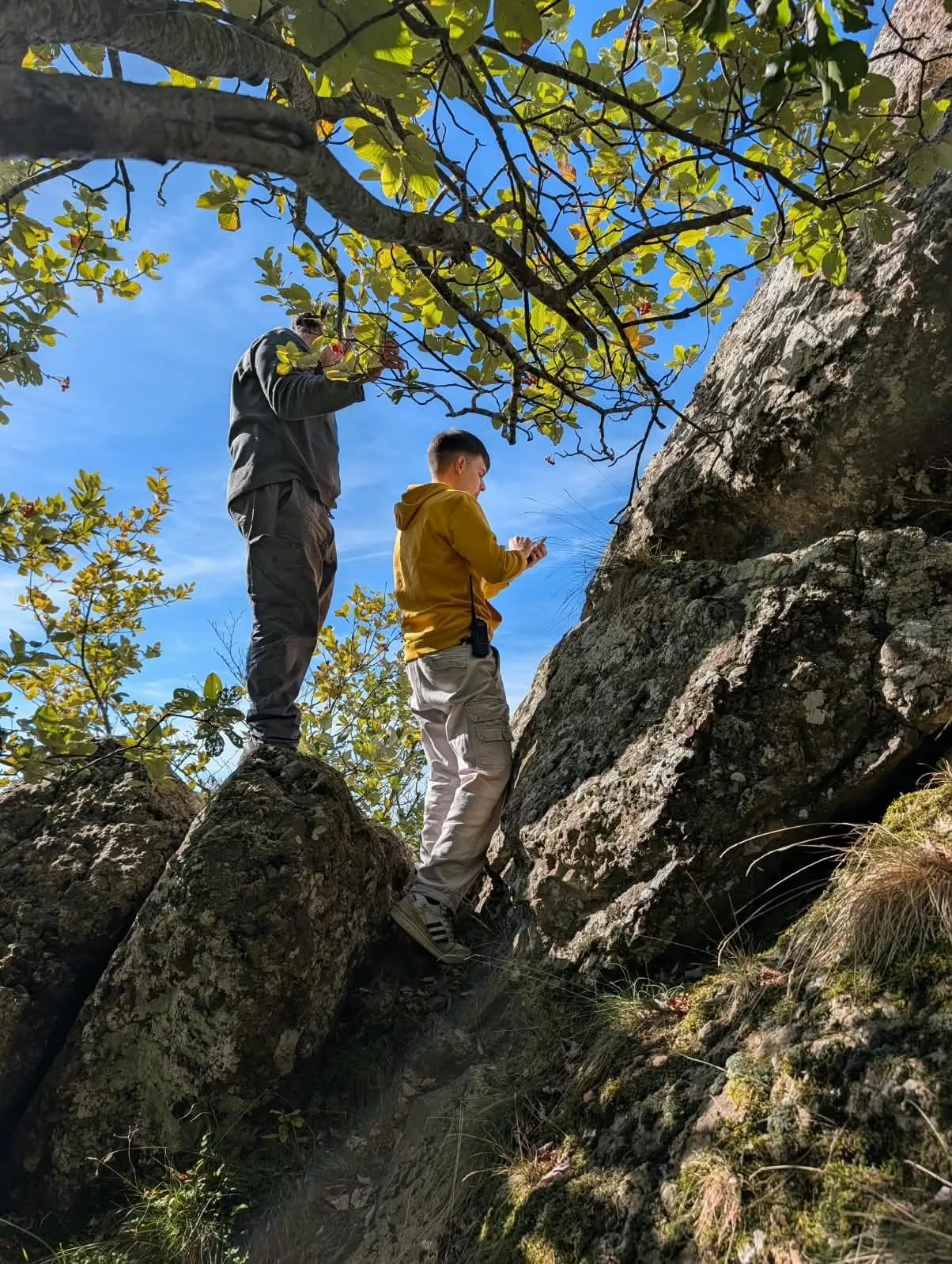 In the mountains, out in the field, with an EnjoyBuds collaborator.
Behind it all is a server that receives messages from every gateway and stores them. On top of that sits the web application: the live map, the chat, the alerts when someone leaves an area or their battery is low.
To find out where the network really reaches, I also made a special firmware for mapping coverage: you walk or drive around with a device connected to your phone, and every position that reaches the server becomes a coloured hexagon on a map.
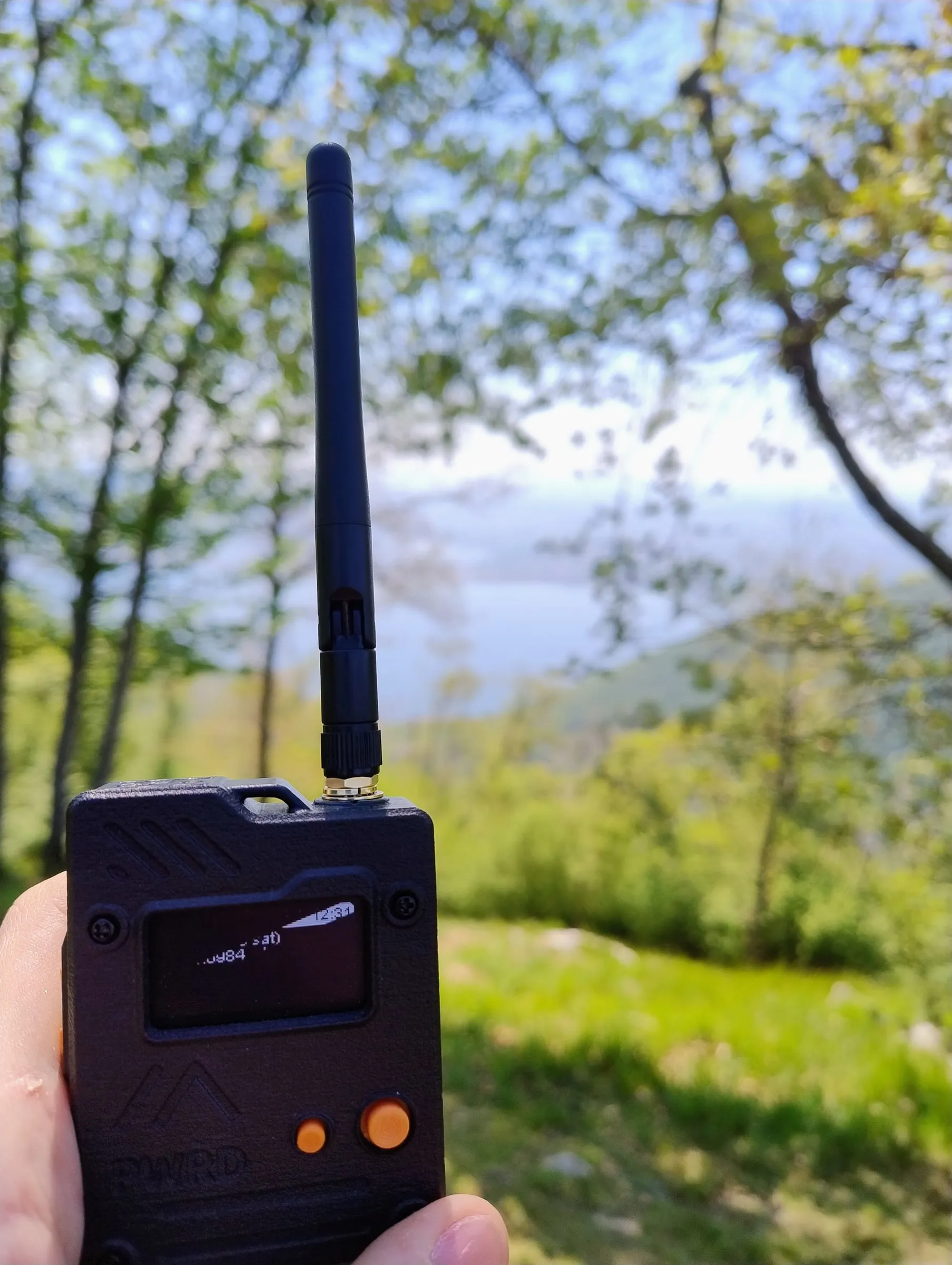 A field test at a friend’s house above Lake Iseo, April 2026.
What I learned
EnjoyBuds goes back a long way: the first time I put LoRa radio, servers, databases and solar panels together was at school, with the weather stations at my technical high school. Here I learned that a message only counts if it arrives, and that seeing a signal leave doesn’t tell you it got there. That everything sent by radio costs battery and takes up a channel that belongs to everyone, so it has to be thought through. And that the test bench always says yes, while the field tells you how things really are.
You’ll find the rest on the EnjoyBuds website.